The air in the Blue House briefing room used to be heavy with the scent of old grievances. For decades, a diplomat from Seoul and a diplomat from Tokyo could sit across from one another, separated by three feet of mahogany and three centuries of blood. They spoke through gritted teeth. They argued over maps, over apologies, over the definition of the past.
But things have changed. Silence has replaced the shouting. Not the silence of anger, but the silence of a shared, focused anxiety. If you liked this piece, you might want to look at: this related article.
The map of Northeast Asia is currently being redrawn, not by cartographers, but by the wake of warships in the Taiwan Strait. If you stand on the shores of Yonaguni, Japan’s westernmost inhabited island, you can see the mountains of Taiwan on a clear day. It is only 67 miles away. For a modern missile, that distance is a heartbeat. For the global economy, it is the width of a razor’s edge.
The Ledger of the Everyday
We often think of diplomacy as a high-minded pursuit involving cufflinks and champagne. It isn’t. It is about the price of the phone in your pocket and the availability of the antibiotics in your medicine cabinet. For another angle on this story, see the recent coverage from Al Jazeera.
Consider a hypothetical engineer in Daejeon named Min-jun. He spends his days perfecting semiconductor lithography. His work relies on specialized chemicals imported from Japan. In the old world, a political spat over a 1910 treaty might suddenly halt those shipments, freezing Min-jun’s assembly line and sending ripples through the global tech market.
Now, consider his counterpart in Hiroshima, Satomi. She works for a logistics firm that manages the flow of liquid natural gas. Both their lives are tethered to the stability of the sea lanes surrounding Taiwan. Nearly half of the world’s container ships pass through that narrow ribbon of water. If those lanes close, the lights in Min-jun’s lab and Satomi’s office don't just flicker. They go out.
The "muscle memory" being developed between Japan and South Korea today is a desperate, necessary reflex. It is the realization that while they might still disagree on the 20th century, they cannot afford to die together in the 21st.
The Drills of Necessity
In the past year, the frequency of joint exercises between the U.S., Japan, and South Korea has moved from "occasional" to "constant." They are practicing how to track missiles. They are practicing how to hunt submarines. They are practicing how to talk to each other when the satellites go dark.
This is the diplomatic version of a high-intensity interval workout. They are building the capacity to react without thinking. When a North Korean missile splashes into the Sea of Japan, or when a Chinese carrier group maneuvers near the Senkaku Islands, the phones between Tokyo and Seoul no longer sit cold on their cradles.
The friction that once defined the relationship—the trade wars and the intelligence-sharing freezes—is being sanded down by the grit of reality. The leaders of these nations have looked at the simulations. They have seen the data.
A conflict over Taiwan would not be a localized event. It would be a global cardiac arrest. The Rhodium Group recently estimated that a blockade of Taiwan could result in over $2 trillion in economic losses. That isn't a number. It's a catastrophe. It represents the collapse of pension funds, the shuttering of hospitals, and the end of the digital age as we currently enjoy it.
The Burden of the Proxy
There is a unique bitterness in being a neighbor to a superpower’s ambitions. Both Japan and South Korea host tens of thousands of American troops. This makes them more than just observers; it makes them participants by default.
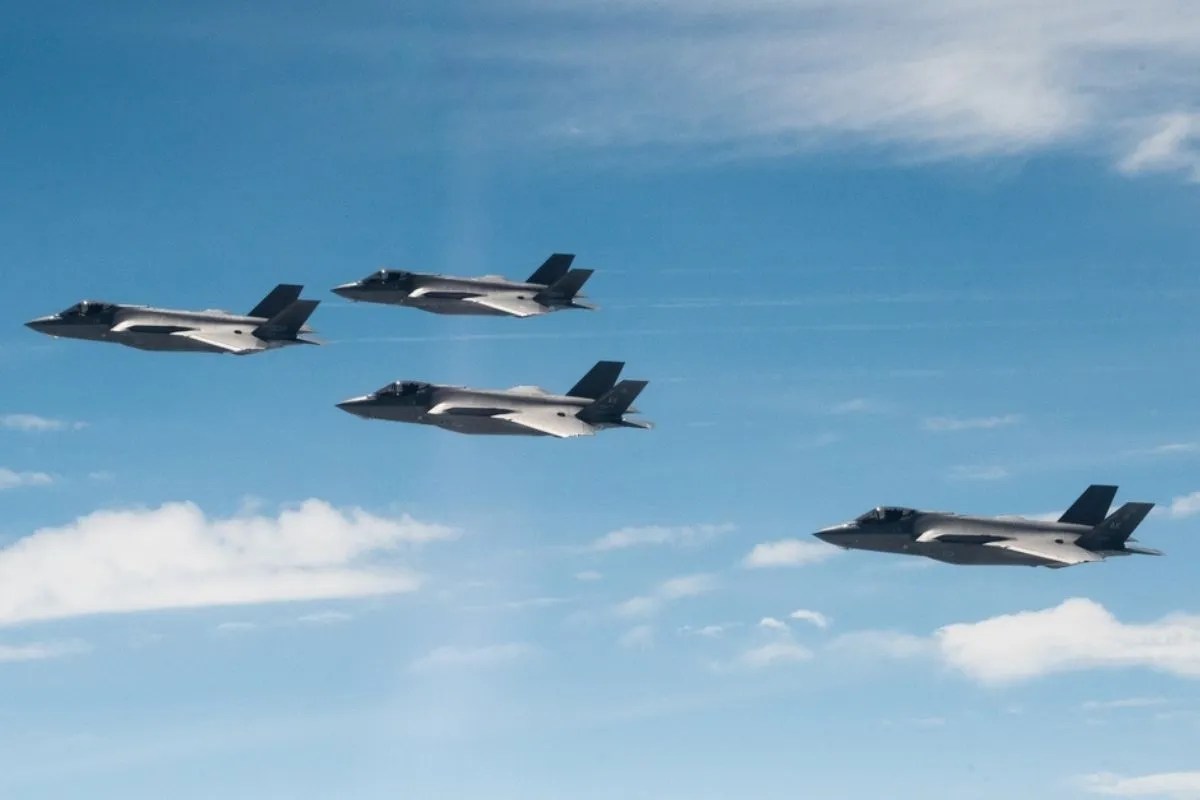
If the United States decides to defend Taiwan, the bases in Okinawa and Pyeongtaek become the front lines. The residents of these cities know this. They live with the roar of F-35s overhead. They see the gray hulls of destroyers on the horizon. The stakes aren't academic for them. They are structural.
Behind the scenes, the coordination is getting granular. It’s moving past the "big picture" summits and into the cubicles of mid-level bureaucrats. They are synchronizing export controls on critical technologies. They are sharing real-time radar data that was once guarded like a crown jewel.
They are learning to trust, not because they necessarily like each other more, but because they have finally identified a common fear that is larger than their common history.
The Fragility of the New Normal
This cooperation is a glass sculpture in a gale. It depends heavily on the political will of individual leaders who are often one election away from being replaced by populists who find more value in stoking old fires than in building new bridges.
In Seoul, President Yoon Suk-yeol has staked his legacy on this rapprochement. It is a risky gamble. A large portion of the electorate still feels that Japan has not done enough to atone for its colonial past. Every time Yoon shakes hands with his Japanese counterpart, he loses a bit of skin at home.
In Tokyo, Prime Minister Fumio Kishida and his successors face a different challenge: convincing a pacifist-leaning public that "counterstrike capabilities" and massive defense budget increases are defensive necessities rather than a return to imperial ghosts.
They are trying to change the soul of their nations in real-time. It is uncomfortable. It is messy. It is, at times, heartbreaking to watch.
The Silent Ships
Walk down to the docks at Busan. Watch the massive cranes swing containers onto ships bound for the South China Sea. Each box represents a promise—that the world will remain predictable enough for commerce to function.
The sailors on those ships don’t talk about "trilateral security architectures." They talk about the weather and their families. But their safety depends entirely on whether those architects in Tokyo and Seoul can keep their hands on the wheel.
The "muscle memory" isn't just about military hardware. It’s about the habit of cooperation. It’s about the phone call made at 3:00 AM. It’s about the intelligence officer who decides to share a piece of decrypted code instead of filing it away.
History is a heavy weight, and in this part of the world, it often feels like an anchor. But as the waters around Taiwan grow choppier, Japan and South Korea are realizing that an anchor is only useful if you aren't trying to outrun a storm.
The ships are still moving. The lights in the semiconductor plants are still on. For now, the muscle is holding. But the strain is visible in every handshake, every joint patrol, and every silent, watchful eye turned toward the strait.
The past is never truly gone, but the future is demanding an immediate, unified response. The cost of failing to provide one is written in the dark water and the cold silence of a world that stopped working because two neighbors couldn't stop looking backward.
The horizon remains gray, the ships continue their trek, and the memory of what happens when diplomacy fails stays etched into the very soil they stand on.