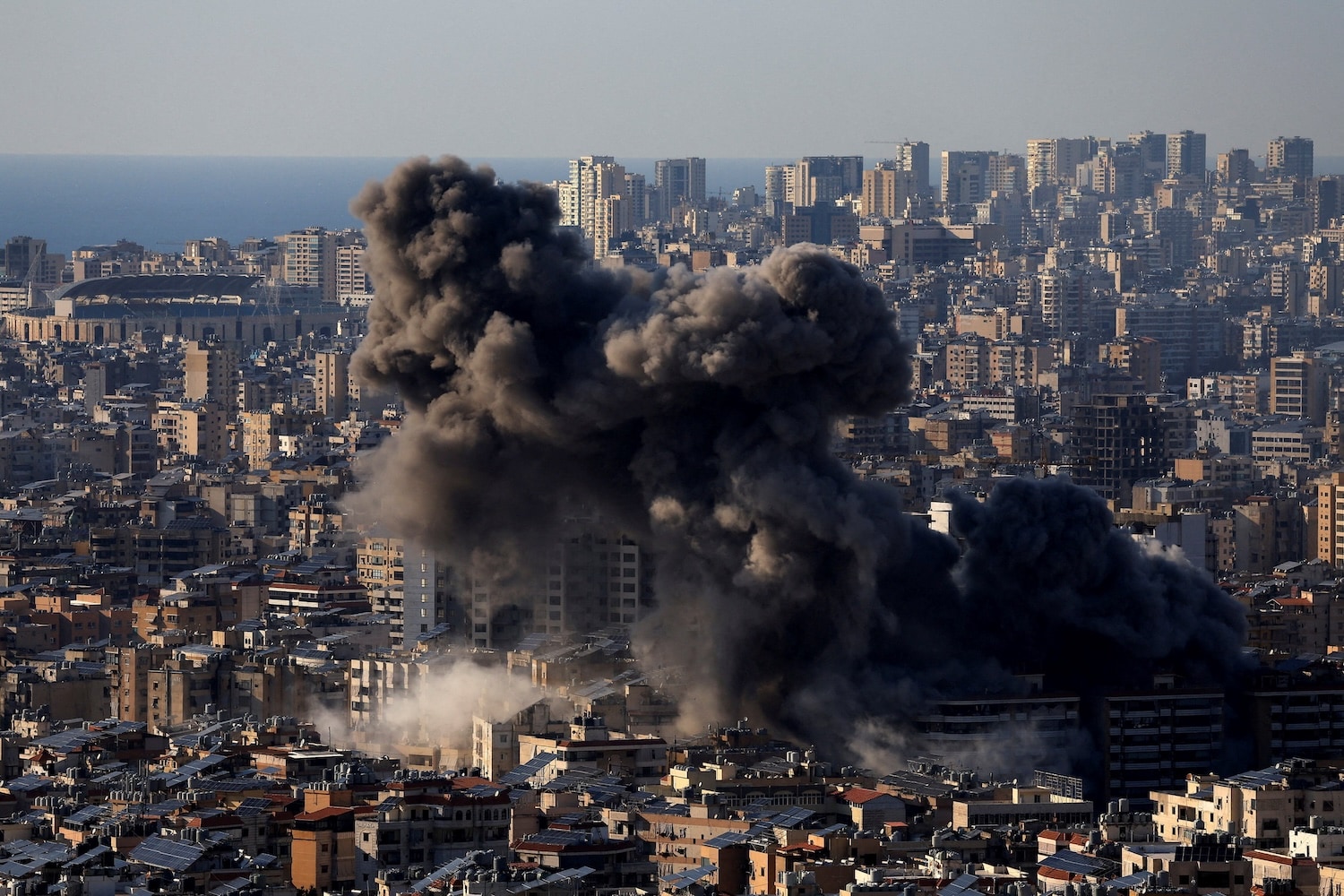
The press vest is no longer a shield. It is a target. When three journalists were killed in a targeted strike in Hasbaya, southern Lebanon, the immediate outcry followed a predictable, tired script: "A violation of international law," "an attack on the free press," "a war crime." This reaction is lazy. It clings to a 20th-century concept of "neutral observation" that has been rendered obsolete by the very technology these journalists use to broadcast their stories.
We are living through the death of the "non-combatant" observer in high-intensity electronic warfare. If you think a blue helmet or a "PRESS" placard offers protection in a zone saturated with AI-driven target acquisition, you aren’t paying attention to how modern kinetic operations actually function.
The Signal is the Target
In the old days, a journalist was a person with a notebook or a film camera. They were physically present but electronically silent. Today, a media crew is a walking lighthouse of radio frequency (RF) emissions. They carry satellite uplinks, high-powered cellular bonded units, encrypted radios, and live-streaming gear.
To a sophisticated military’s signals intelligence (SIGINT) suite, a media hub looks identical to a command-and-control node.
When an IDF drone or an automated artillery system scans a village in southern Lebanon, it isn't looking for a "Press" patch. It is looking for concentrated data bursts. It is looking for the electronic signature of a group of people staying in a fixed location, communicating across borders, and utilizing high-bandwidth uplinks. In a scorched-earth tactical environment, "high-bandwidth" equals "high-value target."
The tragedy in Hasbaya happened at a guesthouse not previously known for military activity. The media industry calls this a "safe house." A modern targeting algorithm calls it an "anomaly."
The Fallacy of the Deconfliction Myth
Mainstream reporting acts as if "deconfliction"—the process of telling a military where you are so they don't hit you—is a digital pinky-promise. It’s not. In reality, deconfliction is often a death sentence.
By registering their coordinates with the warring parties, journalists are effectively providing the exact GPS data required for a strike. You are trusting that the human in the loop will override the machine's recommendation. But in 2026, the "human in the loop" is a bottleneck that militaries are increasingly removing to maintain the "OODA loop" (Observe, Orient, Decide, Act) speed necessary to survive.
If you provide your coordinates to a military that views the information space as a literal theater of war, you haven't bought insurance. You've provided a map.
Information as a Kinetic Weapon
We need to stop pretending that journalism is a passive act. In modern conflict, the narrative is as much a weapon as a 155mm shell. When journalists broadcast live positions, damage assessments, or troop movements—even inadvertently—they are providing "Battle Damage Assessment" (BDA) for the opposing side in real-time.
The "lazy consensus" suggests journalists are bystanders. The brutal truth is that in an era of asymmetric warfare, the camera is a force multiplier. If a journalist’s footage can spark an international intervention or shift a geopolitical alliance, that journalist is a strategic threat. Expecting a military to ignore a strategic threat because of a "Press" sticker is naive at best and suicidal at worst.
I have sat in rooms where tactical commanders viewed live news feeds to adjust their fire. If the news is helping one side, the other side will eventually try to turn off the news. Permanently.
The Cognitive Dissonance of International Law
The Geneva Convention is a gentleman's agreement written for an era of bayonets and telegrams. It assumes a clear distinction between "military" and "civilian." But when a journalist uses the same Starlink terminal as a local militia, or when their "objective" reporting is used by a state actor for psychological operations (PSYOPS), that distinction evaporates.
The "Press" is now a participant.
We see this in the statistics. The death toll for media workers in the Middle East has reached levels that make it the most dangerous profession on earth. This isn't just "bad luck" or "collateral damage." It is the result of a paradigm shift where the "Information Space" is no longer a metaphor—it is a physical coordinate that can be deleted.
Stop Training Journalists for the Wrong War
The current safety training for war correspondents is a joke. They teach you how to apply a tourniquet and how to negotiate at a checkpoint. They don't teach you how to manage your digital footprint or how to mask your RF signature.
If you want to survive southern Lebanon or any modern front, you have to stop acting like a journalist and start acting like a ghost.
- Ditch the live-stream. If you are transmitting live, you are a beacon.
- Burn the deconfliction list. If they know where you are, they can "mistake" you for the enemy.
- Decentralize. Gathering all the media into one "safe" guesthouse creates a single point of failure. It creates a target rich environment for an AI that prioritizes "clusters of activity."
The tragedy in Lebanon isn't that the rules of war were broken. The tragedy is that the rules of war have changed, and the media is still playing by the old ones. The guesthouse in Hasbaya wasn't a sanctuary; it was a data-rich node in a high-speed kill chain.
Until the industry accepts that "neutrality" is no longer a physical shield, the body count will only rise. You aren't being targeted because you're a journalist. You're being targeted because you're an emitter.
Shut up or stay home.