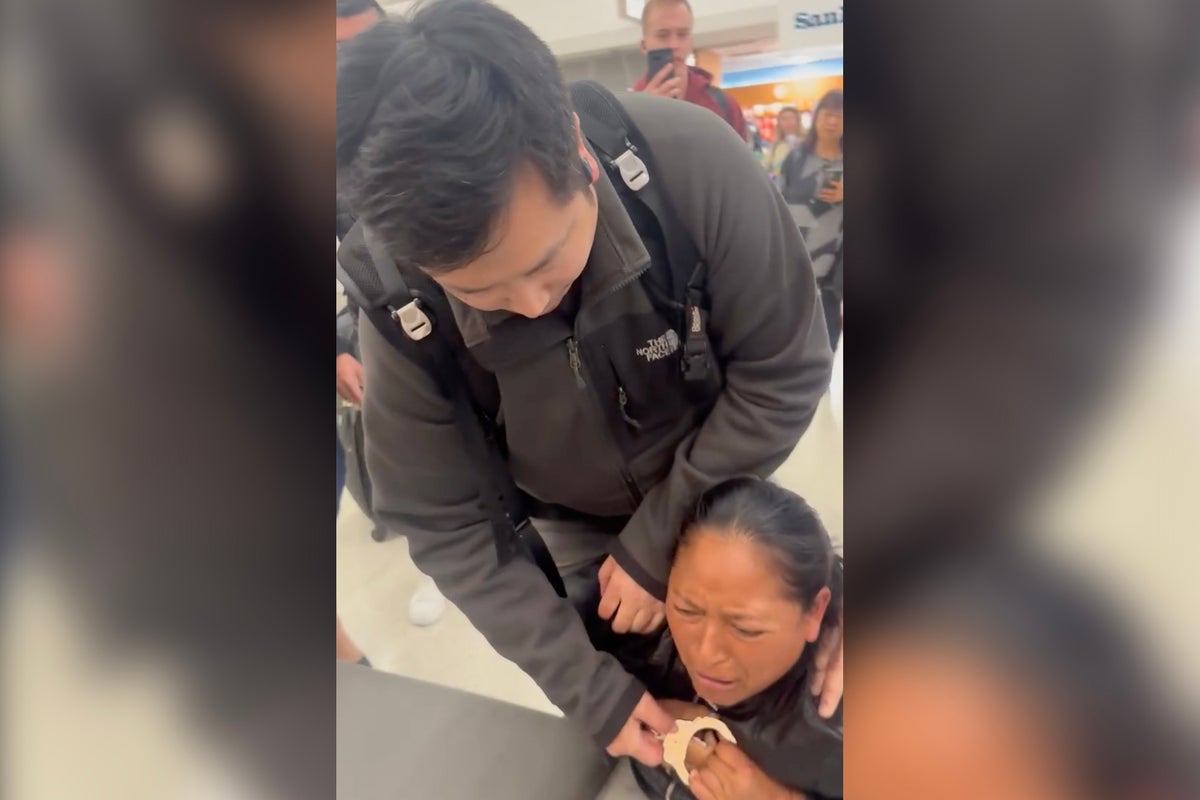
You think your biggest worry at the airport is a forgotten water bottle or a pair of shoes that take too long to unlace. For most travelers, the Transportation Security Administration (TSA) represents a bureaucratic hurdle between the curb and the gate. But a recent, jarring incident at San Francisco International Airport (SFO) proved that for some, the blue uniform isn't just checking for liquids. It’s a direct line to immigration enforcement.
A mother and her young daughter found themselves at the center of a viral storm after TSA agents flagged them before they even reached their flight. This wasn't a random security sweep. It was a coordinated handoff. If you’ve been following the news, you know the footage of the arrest was gut-wrenching. However, the backstory of how they were targeted in the first place reveals a shift in how domestic travel is monitored.
TSA alerted ICE to the mother and daughter long before the handcuffs came out. This wasn't an accident. It's the result of a growing web of data sharing that turns transit hubs into checkpoints for more than just physical safety.
The Paperwork Trail That Triggered an Arrest
Most people assume TSA only cares about bombs and blades. That’s a mistake. When you hand over your ID or travel documents, you aren't just proving who you are to the person standing in front of you. You're entering a system that cross-references databases in real-time.
In the SFO case, the mother was using documents that, while valid for travel under certain state laws, triggered a silent alarm in the federal system. TSA officials claim their primary mission is security, but their SOP (Standard Operating Procedure) includes notifying relevant agencies if they encounter individuals with active warrants or specific immigration flags.
The "viral" nature of the arrest happened because of the setting. It was public. It was loud. It involved a child. But the mechanics of the tip-off happened in a quiet office minutes earlier. When the TSA agent scanned the documents, the system did exactly what it was designed to do: it flagged a discrepancy that ICE had been looking for.
Why the SFO Incident Changes the Conversation
For years, "sanctuary" policies in cities like San Francisco created a sense of relative safety for undocumented residents. People felt they could move through the city without fear of local police turning them over to federal agents. The airport, however, is a different beast entirely.
Airports are federal territory. The rules of the city don't apply once you step onto that terminal floor.
What makes this specific arrest so controversial is the timing. Critics argue that TSA went beyond its mandate of ensuring flight safety to act as an auxiliary arm of border enforcement. If the mother wasn't carrying a weapon and wasn't a threat to the aircraft, why was she detained? The answer is simple: the line between "national security" and "immigration enforcement" has blurred to the point of being invisible.
The Reality of Data Sharing at the Gate
We live in an era where "Secure Flight" programs and biometric sharing are the norm. When you book a ticket, your information is vetted against the No Fly List and the Selectee List. But there's also the "Criminal Justice Information Services" database.
- Information Scrutiny: Your name, birth date, and gender are sent to TSA at least 72 hours before you fly.
- The Red Flag: If there’s a hit for an administrative immigration warrant, the agent is notified.
- The Call: TSA doesn't have the authority to deport you. They do, however, have the phone number for the people who can.
In San Francisco, the handoff was seamless. TSA held the individuals under the guise of a secondary security screening. This gave ICE agents enough time to arrive at the terminal. It’s a tactical delay. It's perfectly legal under federal law, even if it feels like a betrayal of the "sanctuary" promise many travelers expect in California.
Misconceptions About TSA Authority
I hear it all the time: "TSA can't arrest you for your visa status." Technically, that's true. TSA agents are not sworn law enforcement officers with the power to execute immigration warrants. They are screeners.
But here is what people get wrong. They don't need the power to arrest you if they can simply prevent you from leaving. By pulling someone into "secondary," they effectively ground them. Once you're in that side room, you're a sitting duck.
The SFO incident wasn't a "rogue agent" acting on a hunch. It was a procedural success for the Department of Homeland Security. They used one agency’s screening process to facilitate another agency’s enforcement goals. It’s efficient. It’s also terrifying for the millions of people living in the U.S. with precarious legal status.
What This Means for Future Travel
If you think this is a one-off event, you aren't paying attention. The integration of facial recognition technology at major hubs like SFO, LAX, and JFK is making these "silent tips" even easier. You don't even need to hand over a passport anymore; your face is the key that unlocks your entire federal history.
The mother and daughter in San Francisco were caught in a transition period where physical documents still matter. As we move toward 100% biometric entry and exit, these arrests will likely become more frequent and less "viral" because they'll happen before you even get to the crowded gate.
Protecting Yourself in Federal Zones
Knowing the risks is the only way to navigate them. If you or someone you know is traveling with non-traditional identification or has an outstanding administrative order, understand that the airport is the highest-risk environment in the country.
- Check Your Documents: Real ID requirements are changing the game. If your ID says "Federal Limits Apply," you're inviting extra scrutiny.
- Know the Jurisdiction: Remember that state and city laws end at the airport perimeter.
- Legal Counsel: If you're flagged, you have the right to remain silent. Use it. Anything you say to a TSA agent about your status can and will be passed to ICE.
The SFO arrest was a wake-up call. It stripped away the illusion that "travel security" is only about preventing violence. It's about control. It's about data. And as this case proved, it’s about making sure that the federal government knows exactly who is on every plane, regardless of the human cost at the gate.
If you're planning to fly, verify your document status through a legal clinic or immigration expert before you buy the ticket. Don't wait until you're at the front of the line to find out if your name is on a list.

.jpeg?width=1200&auto=webp&trim=64%2C0%2C335%2C0)