The sea has a way of stripping away every identity until only two things remain: the hunter and the hunted. On a stretch of the Mediterranean where the blue of the water meets the iron-gray of a naval blockade, the air usually tastes of salt and diesel. But for those aboard the small vessels of the activist flotilla, the air tasted of adrenaline and an ancient, mounting dread. They were miles from the shore of Gaza, yet the friction of the land was already reaching out to grab them.
Steel met wood. Silence met a megaphone.
The report from the defense ministry was clinical, almost surgical. It spoke of "interception," "compliance," and "legal maritime protocol." It described the redirection of ships to the port of Ashdod as if it were a simple rerouting of a city bus. But a ship is never just a vehicle, and a blockade is never just a line on a map. To the people on those decks, the "Marianne of Gothenburg" and its sister ships weren't just carriers of medical supplies or solar panels. They were floating metaphors for a conflict that has outlived most of its original architects.
The Anatomy of a Standstill
To understand why a few aging boats cause a regional tremors, you have to look past the hull.
Imagine a city under a glass jar. You can see the people inside. They can see the sky. But the air is stale, and the resources are finite. Gaza is that city, and for over a decade, the Mediterranean has been the wall of that jar. The Israeli government maintains that the blockade is a shield, a necessary filter to prevent the flow of weaponry to Hamas. To the activists, that shield is a cage.
When the Israeli Navy’s speedboats began to circle, the narrative collision was more violent than the physical one. The sailors on the naval ships are often barely out of their teens, children of a state that views every approaching vessel as a potential delivery system for a nightmare. On the other side, the activists—doctors, politicians, and writers—view themselves as the conscience of a world that has looked away.
Neither side sees a person. They see a policy.
The Quiet Mechanics of an Interception
The process of stopping a flotilla is a practiced choreography. It begins with the radio. A voice, crackling and disembodied, informs the captain that they are entering a restricted zone. The captain, fueled by a mixture of conviction and the knowledge of the cameras rolling on deck, refuses to turn back.
Then comes the physical presence.
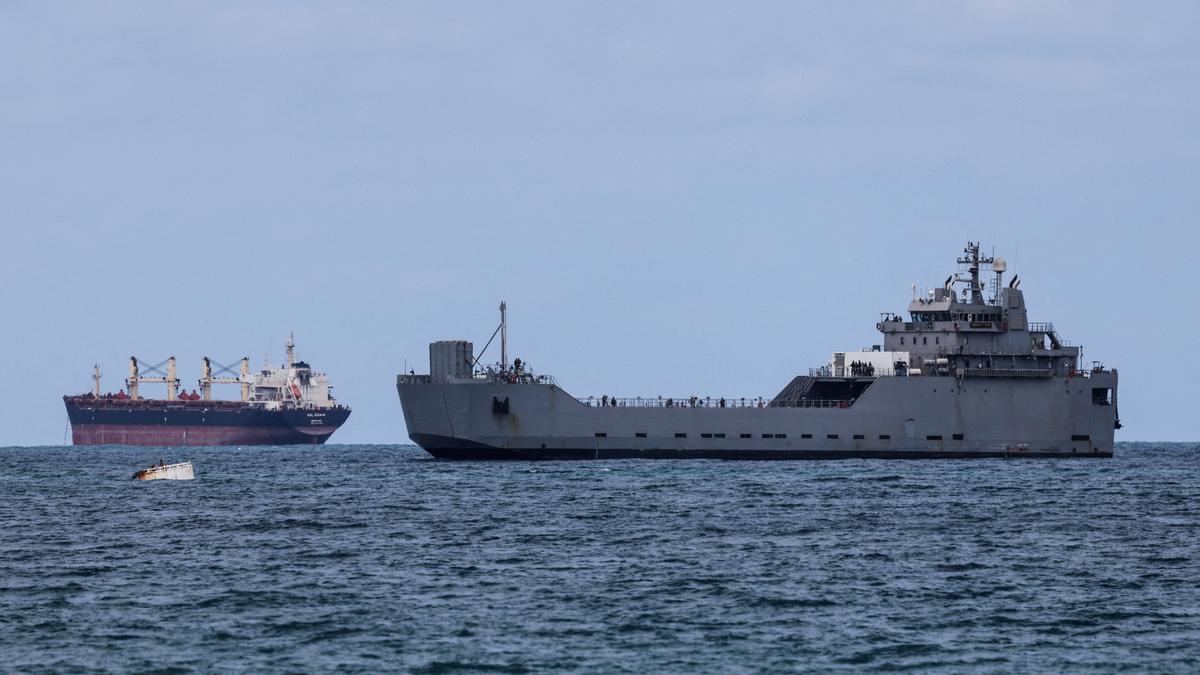
The Israeli Navy doesn't just stop a boat; they overwhelm it. They use the sheer mass of their warships to dwarf the activists' vessels. If the boats do not turn, commandos often board. In the official reports, this is called "boarding without incident." For a 70-year-old activist from Sweden or a Palestinian rights worker, it is a moment of visceral terror—the sound of boots on the deck, the sight of masked faces, the sudden loss of autonomy.
Once the vessels were seized, they were towed toward Ashdod. The supplies—the nebulizers, the medicine, the building materials—were offloaded. The activists were processed, detained, and eventually deported. On paper, the mission failed. The boats never reached the pier in Gaza. The solar panels never powered a hospital.
But the "success" of a flotilla isn't measured in tons of cargo delivered. It is measured in the friction it creates.
The Invisible Stakes of the Shoreline
Why do they keep coming?
Critics call it "provocation tourism." They argue that if these activists truly cared about the people of Gaza, they would send aid through the established land crossings where it can be inspected and verified. They claim the flotillas are a PR stunt designed to force a confrontation that makes Israel look like the aggressor.
But consider the perspective from the pier in Gaza.
There, the sea is a taunt. It is a vast, open horizon that leads everywhere, yet the fishermen are restricted to a few nautical miles. To those living under the blockade, the sight of a foreign ship—even one intercepted miles away—is a signal that the world hasn't entirely forgotten the geography of their isolation.
The tragedy of the interception isn't just the diverted medicine. It is the reinforcement of the status quo. Every time a ship is towed into Ashdod, the wall around the glass jar gets a little thicker. The Israeli government proves it can maintain the perimeter. The activists prove the perimeter exists. And the people in the middle remain exactly where they were: waiting.
The Cost of the Long Game
There is a psychological exhaustion that settles over a conflict when it becomes routine. We have become used to the "Interception Story." We read the headline, we see the grainy footage of the boarding, and we move on. We treat it like the weather—a predictable storm in a predictably volatile region.
But for the sailor who has to point a weapon at a civilian, and for the activist who believes they are a shield for the voiceless, the cost is cumulative. It erodes the possibility of seeing the "other" as anything more than a target or a jailer.
The Mediterranean is supposed to be a bridge between cultures. It is the cradle of civilizations, the highway of the ancient world. Yet, in this specific corner of the sea, it has become a dead end. The intercepting forces and the intercepted activists are trapped in a loop, playing out a script that neither seems able to rewrite.
As the "Marianne of Gothenburg" sat in the harbor of Ashdod, its engines quiet and its crew in custody, the sea continued to lap against the shores of Gaza. The waves don't recognize blockades. They move freely, indifferent to the iron and the politics.
The ships are gone, the news cycle has turned, and the salt continues to crust on the fences that divide the water. The only thing that remains is the profound, heavy silence of a horizon that remains closed.