Xi Jinping just sent a massive shockwave through the People's Liberation Army. It’s not just a typical reshuffle. China’s military leadership is effectively being decapitated by its own commander-in-chief. Two former defense ministers, Li Shangfu and Wei Fenghe, have been handed suspended death sentences. If you’ve been watching Beijing lately, you know this isn't just about "cleaning up" the ranks. It's about survival.
Most Western observers see a headline about a "suspended death sentence" and assume it’s a death warrant. It isn't. In the Chinese legal system, this usually means the person will spend the rest of their life behind bars if they behave for two years. But the message is still loud. It’s a political execution of their reputations. Learn more on a connected issue: this related article.
The Shocking Fall of Li Shangfu and Wei Fenghe
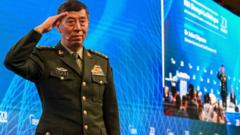
Li Shangfu and Wei Fenghe weren't just low-level bureaucrats. These guys were the face of China’s military might on the global stage. Wei was the inaugural commander of the PLA Rocket Force—the unit that holds the keys to China’s nuclear arsenal. Li was the guy in charge of weapons procurement.
They’ve been expelled from the Communist Party. They’ve been stripped of their ranks. The official charges? Accepting "huge amounts" of bribes and seeking benefits for others. Honestly, "corruption" is the catch-all bucket for political unreliability in the Xi era. When you control the nukes and the buying of the hardware, and you're found wanting, the state doesn't just fire you. It erases you. Additional analysis by The Guardian highlights related views on this issue.
The Rocket Force is the crown jewel of the PLA. It's the primary deterrent against the U.S. in the Pacific. If the leaders of that specific branch are being hauled off in handcuffs, you have to ask what’s wrong with the hardware they were building. Rumors have swirled for months about "missiles filled with water" and silos that don't work. While some of that might be exaggerated, the purge tells us the rot was deep enough to make Xi feel vulnerable.
Why This Purge is Different
We’ve seen crackdowns before. Since 2012, Xi has taken down "tigers and flies" by the thousands. But hitting two defense ministers back-to-back? That’s unprecedented. It signals a profound lack of trust between the civilian leadership and the military elite.
Think about the timing. China is trying to project strength over Taiwan and the South China Sea. You don't bench your starting quarterbacks right before a big game unless they’re actively sabotaging the team. Or unless you think they might turn on you.
The Rocket Force is particularly sensitive. It handles the DF-41 intercontinental ballistic missiles. These are the tools of a superpower. If there’s corruption in the procurement of these systems, the entire defense strategy of the country is a house of cards. Xi is betting that a brutal, public purge will scare the remaining generals into actual competence.
Corruption in the Military-Industrial Complex
Defense procurement is where the money is. It’s the same in any country, but in China, the lack of independent oversight makes it a gold mine for officials. Li Shangfu’s background was in the equipment development department. He was the guy signing the checks for the newest tech.
The graft usually works like this. A general ensures a specific state-owned enterprise gets a massive contract. In return, "gifts" or kickbacks flow back to the general’s family through shell companies. It’s a closed loop.
When you’re buying fighter jets and missile guidance systems, a 1% kickback is a fortune. Xi’s problem is that this isn't just about money. It’s about readiness. If a general takes a bribe to approve a sub-par component, that missile might fail during a conflict. For a leader who has told his military to be "ready to fight and win," that’s treason.
The Political Risk for Xi Jinping
You might think purging the military makes Xi stronger. In the short term, maybe. It removes potential rivals. But it also creates a culture of fear where nobody wants to tell the truth. If you’re a general and you see your predecessors facing the death penalty, are you going to tell the boss that the army isn't ready for a war? Probably not. You’ll say whatever keeps you out of prison.
This creates a dangerous information bubble. The "yes-man" problem is the Achilles' heel of authoritarian regimes. Xi is effectively telling the military that loyalty to him is more important than anything else.
What This Means for Global Security
If you’re sitting in Washington or Tokyo, this looks like a military in crisis. A military that’s purging its top brass isn't a military that’s ready to launch a high-stakes invasion of Taiwan tomorrow. It takes years to rebuild the command structure after a hit like this.
However, don't mistake this for weakness. A leaner, more terrified PLA might actually be more focused on following orders. Xi is clearly trying to professionalize the force. He wants a military that functions like a modern machine, not a series of personal fiefdoms for corrupt generals.
The international community needs to watch who replaces these men. The new appointments will tell us if Xi is looking for competent war-fighters or just more loyalists. So far, the trend is toward "loyalists who can follow a checklist."
The Reality of the Suspended Death Sentence
Let's be clear about what happens next. A suspended death sentence in China is basically life without parole. After two years of "reform," the sentence is typically commuted to life imprisonment. They won't be executed unless they commit another crime while in custody—which is pretty hard to do in a high-security political prison.
It’s a psychological tool. It keeps the "traitor" alive as a living example of what happens when you cross the line. It’s a permanent stain. Their families lose everything. Their names are scrubbed from the history books.
Next Steps for Observers
Keep your eyes on the upcoming military exercises in the Taiwan Strait. If the PLA continues to push high-intensity drills despite these purges, it means the operational level of the military is insulated from the political mess at the top. If the drills scale back, the rot goes deeper than just the ministers.
Monitor the state media reports on "ideological training." When the purges happen, the propaganda machine usually ramps up talk about "absolute loyalty." That’s your signal that the internal friction hasn't settled yet.
Don't buy into the idea that this is just a simple anti-corruption drive. It's a fundamental restructuring of the power balance in Beijing. Xi is making it clear: the Party commands the gun, and the gun better be clean and pointed exactly where he says.
Pay attention to the hardware. If China starts announcing "upgrades" to its missile silos or nuclear storage facilities, it’s a tacit admission that the equipment Li and Wei oversaw was faulty. That’s the real story to watch. The human cost is just the visible part of the iceberg.