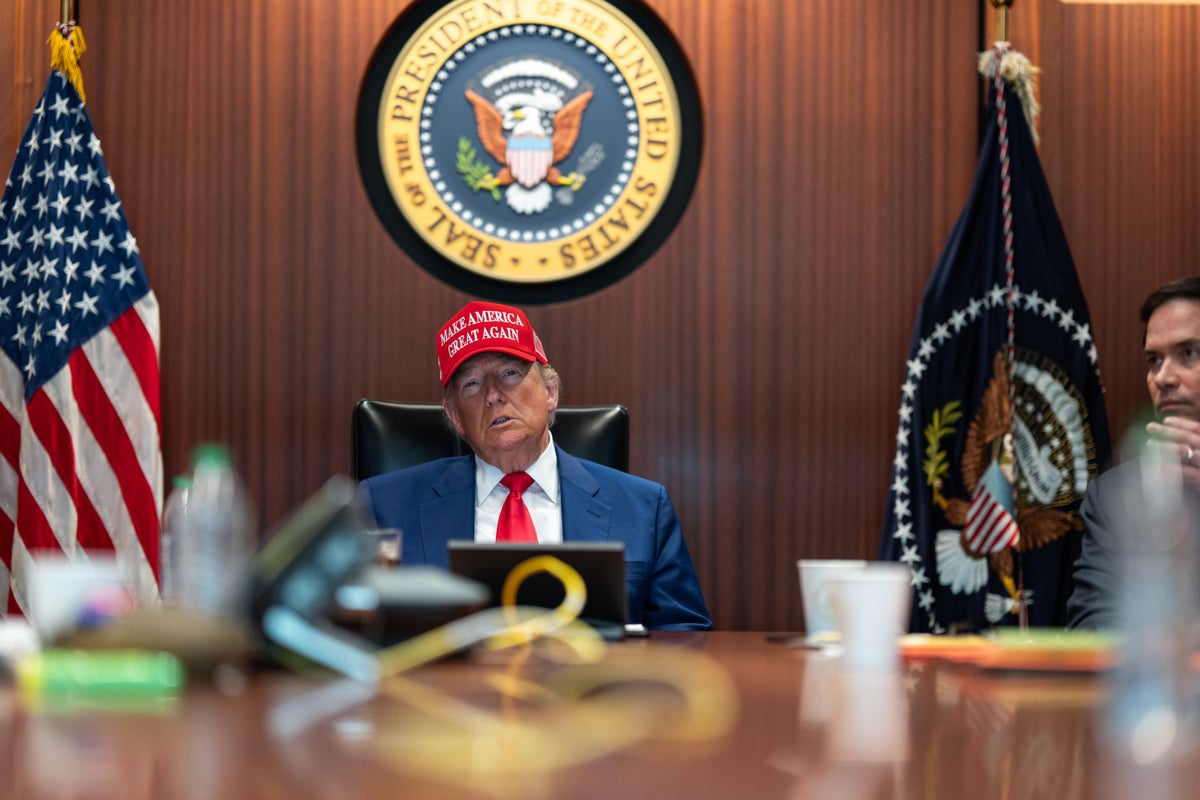
The shift from text-heavy President’s Daily Briefs (PDB) to curated visual "sizzle reels" of kinetic military actions represents a fundamental mutation in the executive decision-making architecture. When a Commander-in-Chief prioritizes high-impact visual data—specifically footage of "stuff blowing up" regarding Iran—the primary risk is not merely a lack of nuance; it is the systematic degradation of the feedback loop required for long-term strategic stability. This visual-first approach creates a cognitive bottleneck where tactical success is mistaken for strategic progress, decoupling the physical destruction of assets from the geopolitical objectives they are meant to serve.
The Cognitive Load of High-Stimulus Intelligence
Human information processing in high-stress environments is governed by the Dual Process Theory. System 1 is fast, instinctive, and emotional; System 2 is slower, more deliberative, and logical. High-definition footage of missile strikes or drone interventions appeals directly to System 1. It provides an immediate dopamine response linked to "results," which can override the System 2 requirement for assessing the second- and third-order effects of such actions.
In the context of Iran, where the theater involves complex proxies, nuclear hedging, and maritime chokepoints, the reliance on visual confirmation of kinetic success introduces three specific distortions:
- The Availability Heuristic: The president may overvalue intelligence that is easily visualized (a burning warehouse) over intelligence that is abstract but more critical (the shifting internal allegiances of the Iranian IRGC).
- The Sunk Cost of Visibility: Once a capability is visualized as effective, the pressure to use it again increases, regardless of whether the strategic environment has changed.
- Confirmation Bias via Curation: If the briefing staff selects "sizzle reels" based on what they know will hold the executive’s attention, they inadvertently filter out "quiet" intelligence—diplomatic cables, economic data, or cyber movements—that lacks a visual payoff.
The Taxonomy of Intelligence Curation
To understand how a "sizzle reel" functions as a tool of statecraft or a failure of it, we must categorize the intelligence being presented. The intelligence cycle is traditionally a closed loop, but the introduction of a "visual-first" preference creates an open-ended loop where the "Act" phase is perpetually seeking the next "Observe" phase.
Tactical Kinetic Data (The Sizzle)
This includes FLIR (Forward-Looking Infrared) footage, satellite BDA (Battle Damage Assessment), and intercepted communications during a strike. The utility of this data is strictly operational. It confirms that a target was neutralized. However, its strategic value is near zero without context.
Strategic Contextual Data (The Substance)
This involves the "Why" and "What Now." It covers the political fallout within Tehran, the impact on global oil prices via the Strait of Hormuz, and the potential for asymmetric retaliation against U.S. assets in Iraq or Syria. When the ratio of Tactical Data to Strategic Data tilts too far toward the former, the executive becomes a "Super-Tactician" rather than a Chief Strategist.
The Cost Function of Visual Briefings
The transition to visual-heavy briefings incurs a hidden "Information Cost." This cost is measured in the loss of complexity. In a text-based or verbal briefing, nuances regarding "probable" versus "certain" outcomes are handled through linguistic qualifiers. In a video of a strike, those qualifiers disappear. The strike is an absolute fact.
The cost function can be modeled by the relationship between Resolution and Context. As the resolution of the tactical action increases (seeing the individual truck explode), the context of the surrounding geopolitical environment often decreases in the mind of the viewer. This is the "Soda Straw" effect: seeing a tiny part of the world in incredible detail while remaining blind to the peripheral threats.
The Mechanics of Bureaucratic Alignment
Briefers and intelligence agencies are not neutral actors; they are organizations that seek to remain relevant and influential. If a president signals a preference for "sizzle reels," the bureaucracy will naturally pivot to produce more of them. This creates a dangerous incentive structure:
- Prioritizing Visual Targets: Collection assets (drones, satellites) may be diverted from gathering boring but vital signals intelligence (SIGINT) to capture exciting visual intelligence (IMINT).
- Compression of Timelines: Visual data demands a faster response. Seeing an active target on screen creates a psychological "Need to Act" that a paragraph of text does not. This shortens the window for deliberative debate among the National Security Council (NSC).
- The Narrative Trap: A series of successful visual strikes can build a false narrative of winning. If the president sees ten videos of "stuff blowing up," the brain synthesizes this into a feeling of total dominance, even if the adversary is simultaneously gaining ground in non-visual domains like cyber-warfare or regional diplomacy.
Structural Vulnerabilities in the U.S.-Iran Conflict
The specific case of Iran exacerbates the risks of this briefing style. Iran’s military doctrine is built on strategic depth and asymmetric "gray zone" operations. Many of their most effective moves—funding Hezbollah, moving illicit funds through front companies, or advancing centrifuge R&D—do not "blow up" on camera.
If the executive’s primary window into the conflict is a reel of kinetic successes, the following blind spots emerge:
- The Nuclear Threshold: Progress in uranium enrichment occurs in sterile labs and underground facilities. It is visually uninteresting. A president focused on the "sizzle" of drone strikes may miss the "hum" of the centrifuges until it is too late.
- Proxy Resilience: Blowing up a proxy munitions depot is a temporary setback. The social and political infrastructure that allows Iran to recruit for those proxies is invisible to a drone camera.
- The Maritime "Tit-for-Tat": Visualizing the sinking of an Iranian fast-attack craft provides a clear win. It does not visualize the subsequent insurance rate hikes for global shipping that may cripple allied economies.
The Redefinition of Executive Briefing Architecture
To mitigate these risks, the intelligence architecture must be restructured to enforce a "Strategic Friction" mechanism. This does not mean removing visuals—which are a powerful tool for clarity—but rather embedding them within a mandatory analytical framework.
Every visual "sizzle reel" should be subjected to a Contextual Overlay Requirement:
- The Counter-Visual: For every video of a kinetic strike, the briefer must present a non-visual indicator of equal or greater importance (e.g., a chart of Iranian currency devaluation or a map of regional cyber-attacks).
- The Probability Matrix: Visuals must be accompanied by a quantified probability of the adversary’s response. If we see a "strike," we must immediately see the "counter-strike" scenarios.
- The Exit Criteria: Briefings must move away from "What we did" to "How this moves us toward the end state." If a video does not clearly contribute to a predefined exit criterion, it is relegated to technical annexes rather than the executive summary.
The danger of the "sizzle reel" is that it turns the most powerful office in the world into a spectator of its own tactical choices. High-definition footage offers the illusion of mastery while masking the reality of entanglement. True strategic advantage is found not in the clarity of the explosion, but in the clarity of the purpose behind it.
The strategic play here is a forced decoupling of visual gratification from policy validation. The National Security Advisor must implement a "Substance-to-Sizzle Ratio" (SSR) where no kinetic footage is shown without a preceding ten-minute briefing on the non-kinetic consequences. This introduces the necessary System 2 "speed bumps" into a System 1 dominated briefing environment, ensuring that the president is not just watching a war, but managing a state.
Would you like me to analyze the specific historical precedents where visual intelligence led to executive overreach, such as the 1962 Cuban Missile Crisis or the 2003 Iraq "Mobile Labs" presentation?