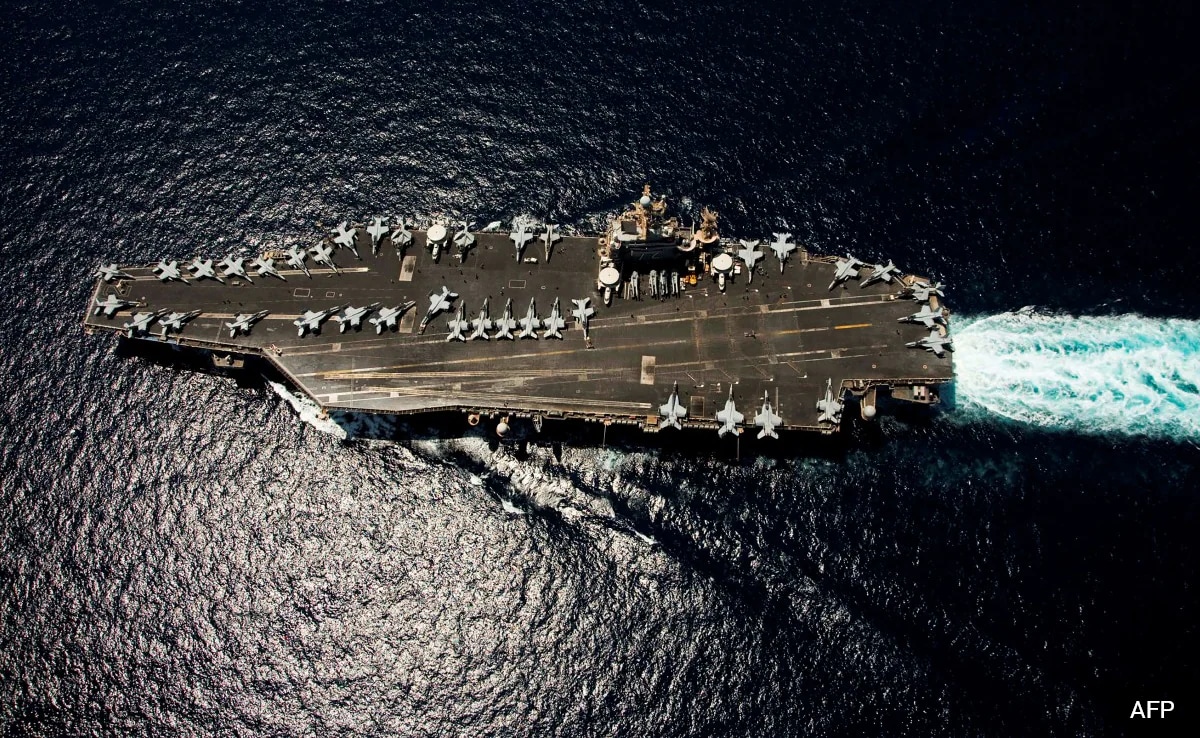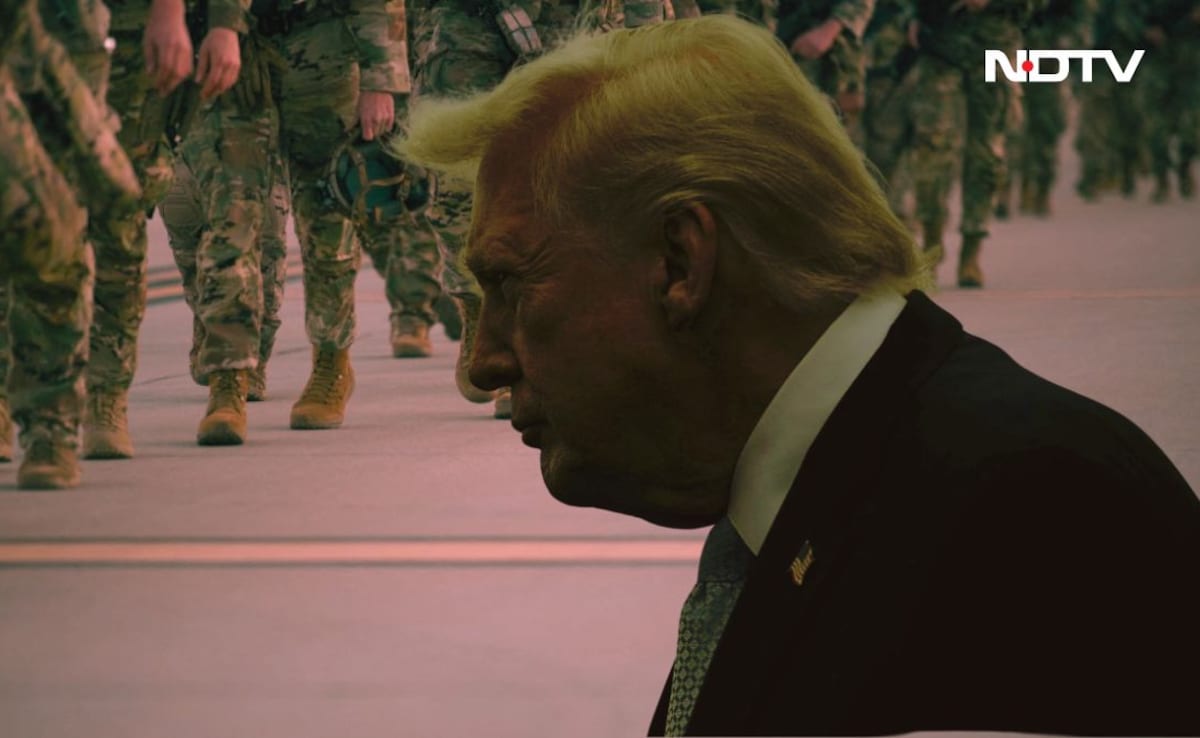
Military movements aren't metaphors. They are physics. When the Pentagon shifts thousands of troops and carrier strike groups into the Middle East while the White House whispers about a "truce," it isn't "buying time." It is building a pressurized chamber. Most analysts are currently obsessed with the optics of diplomacy, treating a ceasefire as a destination. They are wrong. In the cold reality of power projection, a truce is not an end to hostilities; it is a tactical reload.
The prevailing narrative suggests that the United States is using its military footprint as a deterrent to facilitate a grand bargain. This is a fundamental misunderstanding of how regional actors—specifically Iran and its proxies—read American intent. In the Middle East, a surge in manpower coupled with "peace talks" is read as a preparation for a strike, not a gesture of stability. We are watching the classic "Checkmate in Three" scenario where the U.S. believes it is calming the waters while actually making the cost of de-escalation for its adversaries impossibly high.
The Myth of the Strategic Pause
The media loves the word "truce." It sounds like a exhale. In reality, modern warfare between state and non-state actors doesn't have a pause button. If you are not advancing, you are decaying. The current deployment of U.S. assets—including advanced missile defense systems and additional fighter squadrons—serves a singular functional purpose: hardening the target.
When you harden a target, you force the opponent to change their math. They don't just stop; they innovate. By flooding the region with hardware under the guise of "maintaining the status quo," the U.S. is effectively telling every militia from Baghdad to Beirut that their current inventory is obsolete. The result? A desperate rush for more sophisticated, asymmetric tools. You don't get peace; you get an arms race disguised as a sabbatical.
I’ve seen this play out in private intelligence circles and on the ground for two decades. We mistake movement for progress. We think that putting a "Soldier of the Month" poster on a ticking time bomb makes us the bomb squad. It doesn't. It just makes us the closest person to the blast when the timer hits zero.
Logistics Is The Only Truth
Ignore the press briefings. Watch the supply lines. The "truce" talk is the silk sheet covering the iron. You do not move heavy logistics, establish temporary piers, or rotate high-readiness units into a theater if you genuinely believe the diplomacy is working. Logistics are expensive. They are loud. And they are honest.
The U.S. is currently engaging in what we call "Pre-Positioning of Material" (PREPO). This is the act of placing the heavy stuff—tanks, fuel, ammunition—close to the expected fight so that when the "truce" inevitably fails, the response time is measured in hours, not weeks.
- The Shell Game: Moving troops into the region under the banner of "defense" allows the administration to bypass the political friction of an "escalation."
- The Deterrence Paradox: By trying to look too strong to hit, you become too big to miss. Every additional soldier is a high-value target for a low-cost drone.
- The Economic Bleed: Maintaining this level of readiness is a fiscal black hole. The U.S. is spending millions a day to "wait," while its adversaries spend pennies to keep the U.S. waiting.
Why The "Truce" Premise Is Flawed
Most people ask: "Will the truce hold?" This is the wrong question. The right question is: "Who benefits from the silence?"
If you are a regional power looking to eject the U.S. from the Middle East, a truce is a godsend. It stops the bombs from falling on your infrastructure while you rebuild your command and control. It allows you to smuggle in the next generation of anti-ship missiles. It lets you radicalize the next cohort of fighters while the Americans are busy sitting in air-conditioned tents in the desert.
The U.S. thinks it is buying time for a political solution. The opposition is using that same time to solve the tactical problem of how to sink a carrier.
The Asymmetry of Patience
Washington operates on a four-year election cycle. The Middle East operates on a century-long grudge. This mismatch is where American foreign policy goes to die. By deploying massive forces to support a "truce," the U.S. is tethering its prestige to a fragile, temporary agreement. When a rogue element—which always exists—fires a single rocket, the entire U.S. deployment is forced into a binary choice: retreat and look weak, or escalate and start a war nobody "wanted."
There is no middle ground. The presence of the troops removes the middle ground.
The Intelligence Blind Spot
The "insider" consensus is that more boots on the ground equals better intelligence. That’s a lie. More boots on the ground equals more noise. We become obsessed with protecting our own perimeter rather than understanding the enemy's intent.
Imagine a scenario where the U.S. pulls back 30% of its footprint but increases its clandestine maritime interdiction. That would be a signal of confidence and surgical intent. Instead, we choose the "big and slow" approach. We are telegraphing every move. In the digital age, you can't hide a carrier strike group, but you can certainly make it a liability by surrounding it with a diplomatic "truce" that prevents it from acting preemptively.
The Cost of the "Wait and See" Strategy
The "truce" is an expensive lie. It’s a way for politicians to avoid making a hard decision between "Total Exit" and "Total Engagement." By choosing the path of "Heavy Presence + Soft Talk," they are opting for the highest-risk, lowest-reward scenario possible.
- Erosion of Morale: Troops sitting in high-alert status for months with no clear mission "break" faster than those in active combat.
- Strategic Rigidity: Once those assets are in place, they are hard to move. We are pinning ourselves to the map, giving the adversary the initiative to choose the time and place of the next flare-up.
- Diplomatic Devaluation: When you threaten force but never use it, or use it only in "proportional" responses, your threats become background noise.
The "truce" isn't a bridge to peace. It’s a holding pattern over a graveyard. We aren't buying time. We are paying for our own eventual ambush in installments.
Stop looking at the handshakes in Doha or Cairo. Look at the flight manifests heading into CENTCOM. The U.S. isn't preparing for a deal. It's preparing for the fallout of a deal that was never meant to last. The peace is a feint, and the deployment is the only reality that matters.
The trap is set. And we’re the ones who walked into it, carrying our own chains.