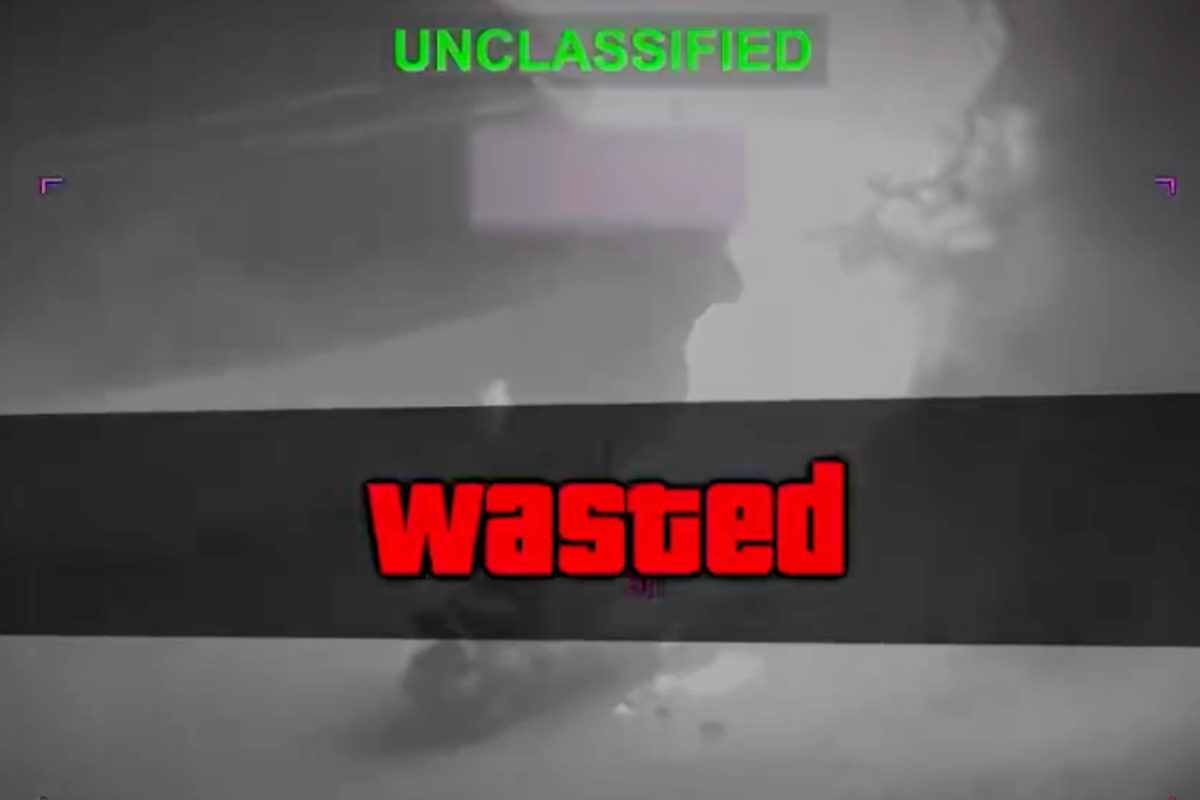
The outrage machine is humming again. You’ve seen the headlines. A politician shares a meme, a family member of a fallen soldier expresses hurt, and the media rushes to frame the entire incident as a "trivialization of sacrifice." It’s a clean, easy narrative. It’s also fundamentally wrong about how power, memory, and influence work in the 21st century.
We are currently witnessing the death of the "hallowed ground" monopoly on military respect. The idea that military service must be discussed only in hushed tones, through somber televised segments or bronze statues, is a relic of a pre-digital age. Critics claim that using military imagery in memes—even crude ones—is an insult. In reality, the refusal to engage with digital culture is what actually threatens to turn the sacrifice of our veterans into an invisible, forgotten footnote.
If you aren't being talked about in a meme, you don't exist in the modern consciousness. That is the brutal, unvarnished truth of the attention economy.
The Sanctity Trap
Traditionalists argue that military sacrifice is too "sacred" for the internet's messy, often irreverent communication style. This is the Sanctity Trap. By cordoning off the military from the vernacular of the internet, we aren't protecting it; we are isolating it.
When we demand that veterans and fallen soldiers only be mentioned in "appropriate" contexts, we are effectively removing them from the daily conversations of the youngest generations. Gen Z and Gen Alpha do not communicate through press releases or formal op-eds. They communicate through remix culture.
I’ve spent fifteen years watching brands and political movements try to "protect" their image by staying out of the digital fray. They all end up the same way: irrelevant. If you want the public to care about the cost of war, that cost must be visible where the public actually lives. Currently, the public lives on TikTok, X, and Instagram.
Memetic Warfare is Not a Mockery
The word "meme" is often used by critics as a synonym for "joke." This is a fundamental misunderstanding of evolutionary biology and communication theory. As Richard Dawkins originally defined it, a meme is a unit of cultural transmission.
When a political figure or a supporter uses a meme involving military themes, they are performing an act of cultural signaling. They are attempting to bridge the gap between a high-stakes, somber reality and a high-speed, digital audience. To call this "trivialization" is like calling a political cartoon "vandalism." It misses the function of the medium.
Consider the "People Also Ask" obsession: Does using military imagery in politics violate the Hatch Act? or Is it disrespectful to use fallen soldiers in campaign ads?
These questions are distractions. The real question is: Who gets to decide how a hero is remembered?
If we leave it entirely to the "official" channels—government archives and somber documentaries—we ensure that the memory of these individuals becomes static. It becomes a museum piece. Memes, for all their perceived crudeness, are alive. They are shared, edited, and debated. They keep the subject in the active stream of consciousness.
The Weaponization of Grief
We need to address the elephant in the room: the tactical use of grieving families for political leverage.
It is a standard play in the media playbook. Find a family member who is rightfully emotional, put them in front of a camera, and use their personal pain to "blast" a political opponent. This isn't journalism; it's emotional ventriloquism.
Every veteran is an individual. Every family is different. For every family that feels "trivialized" by a meme, there is another that feels seen, or another that simply doesn't care. By pretending there is a monolithic "veteran community" that is universally offended by digital irreverence, the media engages in a much deeper form of trivialization than any meme ever could. They turn complex, diverse human beings into a single-issue voting bloc.
I’ve sat in rooms with military consultants who are terrified of "disrespecting the uniform." I tell them the same thing: The most disrespectful thing you can do to a soldier is to make their service boring. Make it untouchable. Make it something that young people feel they can't talk about because they might use the wrong "tone."
The High Cost of Silence
Let’s run a thought experiment. Imagine a world where every politician and influencer followed the "rules" of the critics. No military memes. No "hero" imagery in digital campaigns. No remixing of military history.
What happens?
In ten years, the military-civilian divide becomes an abyss. When the only people talking about the military are those in uniform and a handful of academic historians, the public loses its connection to the warrior class. When that connection dies, so does the political will to provide veterans with healthcare, housing, and support.
Irreverence is a sign of integration. We joke about things that are part of our lives. We meme the things we care about. The moment we stop meming the military is the moment the military has become a foreign entity to the American public.
The Logic of the Digital Battlefield
If you are a veteran or a family member feeling stung by a post, your feelings are valid, but they are not a policy framework. You cannot legislate or shame the internet into a state of "decorum." The internet has no decorum. It only has engagement.
The goal should not be to stop the memes. The goal should be to hijack them.
- Attack the premise: If a meme is inaccurate, don't cry about "respect." Counter it with a better, sharper, more viral truth.
- Embrace the medium: Military culture is inherently full of dark humor and "embrace the suck" energy. This is a natural fit for internet culture. Use it.
- Demand visibility over "sanctity": A soldier’s name being typed into a search bar because of a controversial post is better for their legacy than a name that is never spoken at all.
The New Rules of Engagement
The critics of "trivialization" are essentially asking for a return to the 1950s, where three news anchors told us how to feel about national sacrifice. That world is gone. It’s never coming back.
In the current landscape, visibility is the only currency that matters. If the price of visibility is a few "tasteless" memes or a heated digital debate, that is a price worth paying. The alternative is a quiet, respectful slide into total national amnesia.
Stop asking for "respect" from a platform that was built for disruption. Start demanding impact. If you want to honor the fallen, keep their names in the mouth of the public, even if that public doesn't know how to use a formal salutation.
The battlefield has shifted from the dirt to the data. If you aren't willing to get your hands dirty in the comments section and the image editors, you've already surrendered the legacy you claim to protect.
The "outrage" over memes isn't about protecting veterans. It's about maintaining a monopoly on the narrative. It’s time to break the monopoly.
Own the meme. Own the message. Or get out of the way.